
Disclosure: some links in this post are affiliate links. If you book through them I may earn a small commission at no extra cost to you. I only recommend places I have stayed in or would genuinely book myself.
Table of Contents
ToggleQuick answer: how to spend 7 days in Osaka
Seven days in Osaka is enough to see the city properly and fit in day trips to Kyoto and Nara. I recommend basing yourself in Hommachi, a calm, central business district on the Midosuji subway line, which puts Dotonbori (street food, cheap fashion, neon) and Umeda (department stores, luxury brands, skyscrapers) each a few stops away.
My top hotel pick is Hotel Cordia Osaka Hommachi, where I stayed. Plan roughly 3 days in the city, 2 to 3 day trips, and 1 flexible day for Universal Studios Japan, Kobe or more shopping.
Osaka at a glance
What you need to know | The short version |
|---|---|
Best known for | Street food, shopping and fashion, nightlife, Osaka Castle, friendly and loud locals |
Nickname | “The nation’s kitchen” (tenka no daidokoro) |
How long to stay | 5 to 7 days, including day trips to Kyoto and Nara |
Best area to stay | Hommachi (my pick), Namba/Dotonbori or Umeda |
Main airport | Kansai International Airport (KIX), around 40 to 60 minutes from the centre |
Getting around | Osaka Metro, especially the red Midosuji line, plus JR and private railways |
Currency | Japanese yen. I use £1 = approx ¥215 throughout this guide |
Best time to visit | Spring (late March to early April) and autumn (October to November) |
Mid-range daily budget | Approx £140 to £190 per person including a hotel |
Osaka was one of the stops on my solo trip to Japan, and I spent my time there eating my way through Dotonbori, getting completely lost in Umeda, and learning very quickly that nobody crosses the road on a red man. This guide is everything I wish I had known before I arrived: what Osaka is known for, where to stay, the three hotels I would book, a day-by-day 7-day itinerary, and my honest thoughts on whether it is worth it. If you are still planning the bigger trip, start with my solo travel guide to Japan.
What is Osaka known for?
Osaka is Japan’s third-largest city and the commercial heart of the Kansai region in western Japan. It is best known for three things: its food, its shopping and its personality. Where Tokyo can feel polished and orderly, Osaka is louder, funnier and a little rougher around the edges, and locals are famously chatty and direct.
Food: the nation's kitchen
Osaka earned the nickname “the nation’s kitchen” centuries ago as a merchant city where rice and goods from across Japan were traded. Today it lives up to it through kuidaore, a local word that roughly means “eat until you drop”. The dishes you have to try are:
- Takoyaki – battered balls of octopus cooked in a special moulded pan, topped with sauce, mayonnaise and bonito flakes. Let them cool, they are molten inside.
- Okonomiyaki – a savoury cabbage pancake cooked on a hot plate, often right in front of you.
- Kushikatsu – deep-fried skewers of meat, vegetables and seafood, especially around Shinsekai. The one rule: never double dip in the shared sauce.
- Kitsune udon – udon noodles topped with sweet fried tofu, which Osaka claims to have invented.
- Street snacks at Kuromon Market, from grilled scallops and wagyu skewers to fresh fruit.
Shopping and fashion
Osaka is one of the best shopping cities in Japan, and it splits neatly into two very different experiences. In the south (known locally as Minami) you have Shinsaibashi-suji, a long covered shopping arcade, plus Amerikamura (“Amemura”), the go-to area for vintage, streetwear and the cheap clothes everyone raves about online. In the north (Kita), Umeda is home to huge department stores such as Hankyu, Hanshin and Daimaru, the Grand Front Osaka and Lucua malls, and a lot of designer and luxury brands.
Sights, history and entertainment
- Osaka Castle – a striking castle tower rebuilt in 1931, surrounded by a huge park, moats and stone walls.
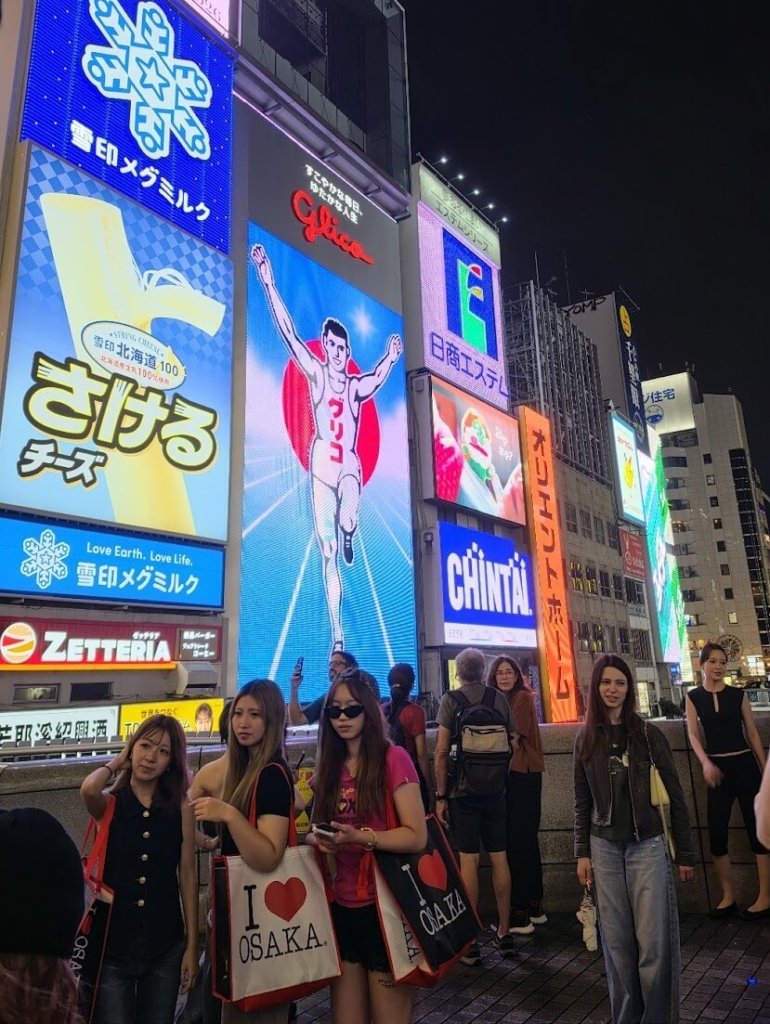
- Dotonbori – the neon-lit canal area with the famous Glico running man sign.
- Umeda Sky Building – an open-air rooftop observatory connecting two towers.
- Shinsekai and Tsutenkaku Tower – a retro, slightly faded neighbourhood full of kushikatsu bars.
- Universal Studios Japan – home to Super Nintendo World and the Wizarding World of Harry Potter.
- Expo 2025 – Osaka hosted the World Expo in 2025 on Yumeshima island, which brought a lot of new investment into the city.
The perfect base for Kansai
Osaka is also brilliantly connected. Kyoto is around 30 minutes away by train, Nara around 40 to 50 minutes, and Kobe roughly 20 to 30 minutes, which makes it an ideal base if you would rather unpack once than keep moving hotels. You can find more ideas in my guides to travelling solo around Asia.
Where to stay in Osaka: the best areas
Choosing the right area makes a huge difference in Osaka, because the city’s two main hubs, Namba/Dotonbori in the south and Umeda in the north, have completely different personalities. My recommendation is to stay in between them, in Hommachi.
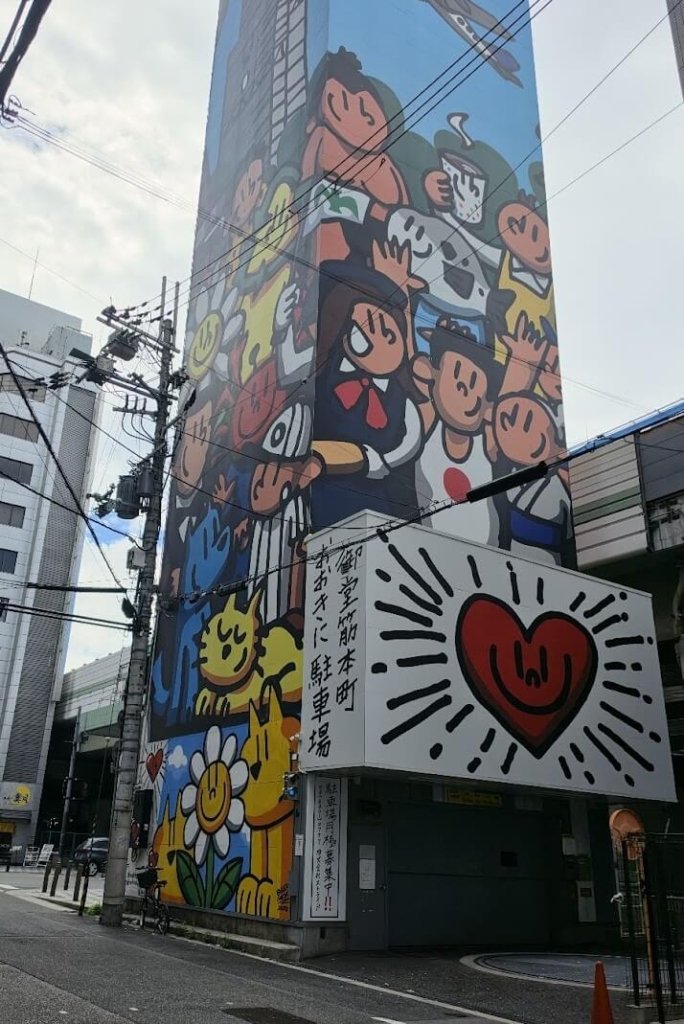
Hommachi (my recommendation)
Hommachi (sometimes spelt Honmachi) is a business district right in the middle of Osaka, between Umeda and Namba. It is where I stayed, and I would book it again without hesitation. Here is why:
- It is central. Hommachi Station sits on the Midosuji, Chuo and Yotsubashi subway lines, so Umeda and Namba are each only a couple of stops away.
- It is calm. After a chaotic day in Dotonbori, coming back to quiet streets was exactly what I needed.
- It is good value. Hotels here tend to cost less than equivalent places right on top of Dotonbori or in Umeda.
- You can walk to the action. Shinsaibashi is roughly a 10 to 15 minute walk, and both Dotonbori and Umeda are around 30 minutes on foot if you fancy the walk.
The only real downside is that Hommachi is quieter at night and has fewer tourist sights of its own, but for me that was the whole point.
Namba and Dotonbori
If you want to be in the middle of the food, neon and nightlife, stay around Namba, Dotonbori or Shinsaibashi. You will be steps from the Glico sign, Kuromon Market and Amerikamura, and Namba Station has direct trains to Kansai Airport and Nara. The trade-off is noise, crowds and a lot of stimulation. It is brilliant for a night or two and full-on for a week.
Umeda (Kita)
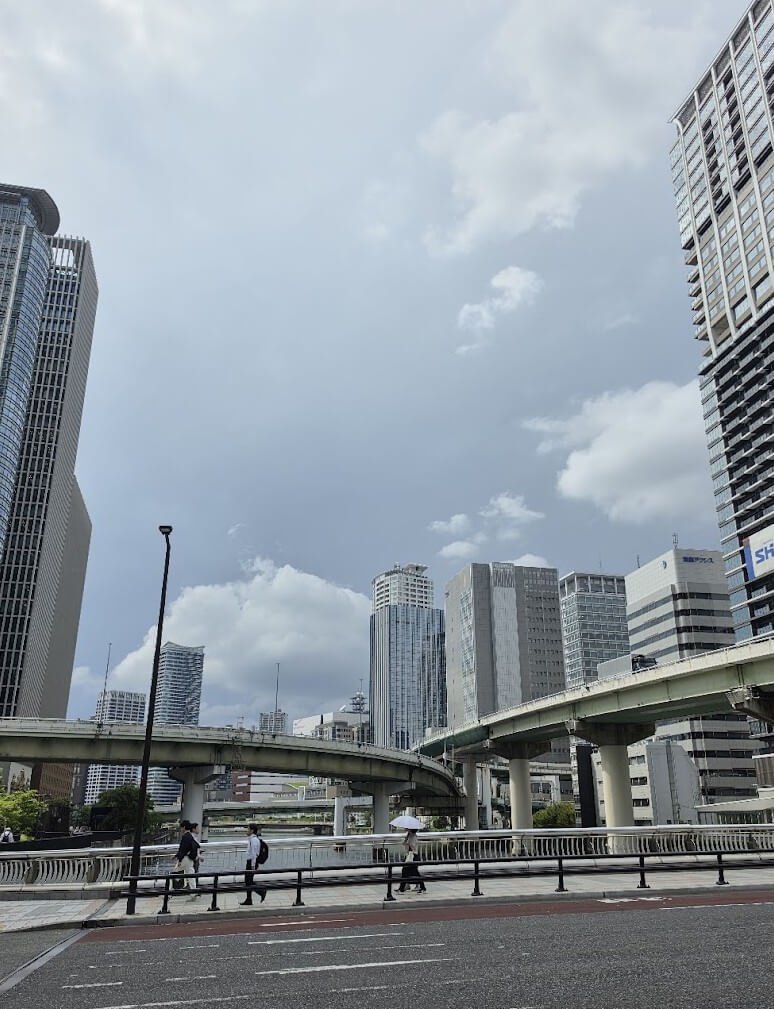
Umeda is Osaka’s upscale northern hub, built around Osaka Station and Umeda Station. It is the best choice if shopping is your priority or you are planning lots of day trips by JR, since trains to Kyoto, Kobe and Shin-Osaka (for the bullet train) leave from here. It feels more Western and more polished than the south, with prices to match.
Other areas worth considering
- Tennoji – good value, close to Shinsekai and Abeno Harukas, with direct JR trains to Kansai Airport and Nara.
- Shin-Osaka – convenient if you are arriving or leaving by shinkansen, but it is not a great base for exploring.
- Bay Area – only really worth it if Universal Studios Japan is the main reason for your trip.
Hommachi vs Dotonbori vs Umeda: which is best?
Area | Vibe | Best for | Watch out for |
|---|---|---|---|
Hommachi | Calm, central, business district | First-timers and solo travellers who want a quiet base | Fewer sights and quieter evenings |
Namba/Dotonbori | Chaotic, neon, local and lively | Street food, nightlife and cheap fashion | Noise, crowds, sensory overload |
Umeda | Upscale, modern, shopping heavy | Luxury shopping and JR day trips | Confusing stations and higher prices |
Tennoji | Down to earth, good value | Budget stays and airport access | Further from Umeda |
The top 3 hotels in Osaka
These are my three picks, one for each of the main areas, so you can choose based on the kind of trip you want. Prices change a lot with the season, so treat the figures below as a rough guide and check live rates before you book.
1. Hotel Cordia Osaka Hommachi (where I stayed)
Detail | |
|---|---|
Area | Hommachi, Chuo Ward |
Nearest station | Hommachi (Midosuji, Chuo and Yotsubashi lines), a short walk away |
Rough price | Around £90 to £130 per night for a double (approx ¥19,000 to ¥28,000) |
Best for | Solo travellers and couples who want a quiet, central, good-value base |
My rating | 9/10 (my Booking.com review, September 2026) |
Check-in / check-out | 15:00 / 11:00 |
This is the hotel I stayed in, and it is the reason I recommend Hommachi so strongly. I rated it 9 out of 10 on Booking.com, and I would sum it up as a great value-for-money hotel in a quiet area. It is a modern, design-led hotel with 101 rooms, each featuring Japanese artwork. Here is what stood out during my stay:
- The room was quite spacious. Hotel rooms in Japan are famously compact, so having space to properly unpack made a real difference over a longer stay.
- The location was perfect. Dotonbori and Umeda are each around 30 minutes away on foot, and Hommachi metro station is very close by for quicker access to the rest of the city.
- The area is quiet. This was my favourite thing about it. After a full-on day in Dotonbori or Umeda, I could come back and properly wind down.
- The staff were friendly and helpful throughout my stay.
- Handy extras on the 6th floor. There is a vending machine and a microwave for guests, which is perfect for heating up a convenience store dinner after a long day. Guest washer-dryers are also available.
Worth knowing: many rooms have a walk-in shower rather than a bathtub, and like most hotels in Osaka a small accommodation tax is paid at the property.
Book your stay at the Hotel Cordia Osaka Hommachi.
2. Cross Hotel Osaka (best for Dotonbori)
Detail | |
|---|---|
Area | Shinsaibashi/Dotonbori, Chuo Ward |
Nearest station | Namba (around 3 minutes) and Shinsaibashi (around 5 minutes) |
Rough price | Around £120 to £220 per night (approx ¥26,000 to ¥47,000) |
Best for | Being right in the middle of the food, neon and nightlife |
If you want to be in the thick of it, Cross Hotel Osaka is about as central as it gets, just around the corner from the Glico sign and the Shinsaibashi-suji arcade. It is a stylish four-star hotel with 229 rooms, a bar and two restaurants, and some rooms look out over the Dotonbori canal. Expect to pay more than in Hommachi, and expect busier streets outside, but you can walk back from dinner in minutes.
Book your stay at the Cross Hotel Osaka.
3. Hotel Hankyu RESPIRE Osaka (best for Umeda)
Detail | |
|---|---|
Area | Umeda, Kita Ward |
Nearest station | JR Osaka Station (around 3 minutes via the bridge exit) |
Rough price | Around £105 to £185 per night (approx ¥22,500 to ¥40,000) |
Best for | Shopping, day trips by JR and easy airport transfers |
Hotel Hankyu RESPIRE Osaka sits above the Yodobashi Umeda shopping complex and next to Grand Front Osaka, so you are right on top of Umeda’s shops and restaurants. It is a big, efficient hotel with over 1,000 rooms, a 24-hour gym, self-service laundry and great city views from the upper floors. It is the one I would pick if I wanted to spend most of my time shopping or heading out to Kyoto and Kobe.
Book your stay at the Hotel Hankyu RESPIRE Osaka.
The perfect 7-day Osaka itinerary
This itinerary balances the city itself with the best day trips from Osaka. It assumes you are staying in Hommachi, but it works from anywhere central. Swap days around to suit the weather.
Day 1: Arrive, settle in and see Dotonbori at night
From Kansai Airport, the Nankai line runs to Namba in around 40 minutes, and from there it is two stops north on the Midosuji line to Hommachi. Drop your bags, then walk south through the Shinsaibashi-suji arcade to Dotonbori for your first takoyaki and a photo with the Glico sign. Dotonbori is at its best after dark, when the neon comes on.
Day 2: Osaka Castle and a slower afternoon
Spend the morning at Osaka Castle. The park is free, and entry to the main tower costs ¥1,200 (approx £5.60). Allow 2 to 3 hours to walk the grounds and moats. In the afternoon, head to Kuromon Market for a grazing lunch, then take it easy. Osaka is a lot, and pacing yourself early helps.
Day 3: Umeda shopping and the Sky Building
Dedicate a day to Umeda. Browse the Hankyu and Hanshin department stores, Grand Front Osaka and Lucua, ride the red Ferris wheel on top of HEP Five, then finish at the Umeda Sky Building’s rooftop observatory for sunset (roughly ¥2,000, approx £9). Read my section on Umeda below before you go, because you will get lost.
Day 4: Day trip to Nara
Take the Kintetsu line from Osaka-Namba to Kintetsu-Nara (around 40 minutes). Nara Park is home to hundreds of free-roaming deer, and Todai-ji temple houses one of Japan’s largest bronze Buddha statues. Buy deer crackers, bow to the deer, and keep a firm grip on your map.
Day 5: Day trip to Kyoto
The JR Special Rapid from Osaka Station reaches Kyoto in around 30 minutes. Start early at Fushimi Inari Taisha to beat the crowds under the orange torii gates, then head to Gion and Higashiyama in the afternoon. Kyoto deserves several days of its own, but one day gives you a proper taste.
Day 6: Universal Studios Japan, Kobe or Himeji
Use this as your flexible day. Theme park fans should book Universal Studios Japan (tickets are date-based, so book ahead and budget roughly £40 to £55 for a standard one-day pass). Otherwise, head to Kobe for the harbour and Kobe beef, or to Himeji to see Japan’s most famous original castle.
Day 7: Shinsekai, Amerikamura and last-minute shopping
Spend your last morning in Shinsekai for kushikatsu under Tsutenkaku Tower, then head up to the Abeno Harukas observatory for one final view of the city. Finish in Amerikamura and Shinsaibashi to pick up the cheap clothes and souvenirs you have been eyeing all week.
Why you should visit Osaka at least once in your lifetime
Even though Osaka is not a city I feel I need to return to, I genuinely think everyone should experience it at least once. Here is why:
- The food is unforgettable. Osaka is arguably the best city in Japan for casual, cheap and brilliant street food.
- It shows a different side of Japan. Osaka is louder, funnier and more informal than Tokyo, which helps break the stereotype that Japan is all quiet reserve.
- The shopping covers every budget. From bargain streetwear in Amerikamura to luxury flagships in Umeda, it all sits within a few subway stops.
- It is a perfect base. Kyoto, Nara, Kobe and Himeji are all easy day trips, so you can see a huge amount without changing hotels.
- It is safe and easy for solo travellers. The metro is simple to use, English signage is good in the centre, and I never felt unsafe walking around at night.
- It is surprisingly good value. With the pound stretching well against the yen, eating out and getting around costs less than you might expect.
My honest thoughts on Osaka
Did I like Osaka? Yes. It was definitely a different kind of place that I was not prepared for
Would I go back? Probably not. For me, Osaka is a brilliant once-in-a-lifetime city rather than one I need to keep returning to.
Here are the things that stood out to me most, including a few I was not expecting.
It is more upscale and built up than I expected
I had pictured Osaka as the scrappier, cheaper little sibling to Tokyo. In reality, huge parts of the city are modern, polished and packed with skyscrapers, glossy malls and high-end brands. It is a big, wealthy city, and it feels like one.
Nobody jaywalks, no matter how small the road
This one genuinely surprised me. It does not matter whether the road is a six-lane highway or a tiny side street with no car in sight: people wait at the kerb until the green man appears. Jaywalking is technically against the rules in Japan, but more than that it is simply not done. Follow the locals and wait.
Dotonbori is local and vibey, Umeda feels more Western
The two main hubs feel like different cities. Dotonbori has a more local, vibey energy, with street food stalls, neon signs and people everywhere. Umeda is more upscale and shopping heavy, and it felt more Western than the other areas I explored.
Dotonbori can be chaotic and overstimulating
Dotonbori is exciting, but it is also very chaotic and, at times, genuinely overstimulating: flashing signs, music, crowds and food smells all at once. It is also where you will find the cheap clothes and bargains everyone raves about. My advice is to go in with a plan, take breaks, and head back to a quieter area when you have had enough.
Umeda’s designer shopping is priced like the UK
If you are hoping for bargain luxury, Umeda might disappoint. It has plenty of designer and luxury outlets, but the pricing felt very similar to Western countries like the UK. The real savings in Osaka are in the mid-range and cheaper shops down south, not in the flagship stores.
Shopping tip: Japan’s tax-free system changes on 1 November 2026. From that date, visitors pay the full price including consumption tax in store and claim the refund when leaving Japan, so keep your receipts and purchases with you at the airport.
Everything is on different levels
Osaka is built vertically and underground. Stations, malls and walkways are stacked on top of each other, and it can get genuinely confusing working out which level you are on or how to find the right exit. It is easy to surface on the wrong side of a road or in a completely different building from the one you meant to find.
The metro is more complicated than I expected
I will be honest: the Osaka Metro was a lot more complicated than I would have liked. The bigger stations have 30+ different entrances and exits, each leading to a different street, building or shopping centre, and it is very easy to get lost underground. Coming up through the wrong exit can leave you a long way from where you meant to be.
The good news is that it is much easier than it first looks once you are on the move. Signage is everywhere and it is also in English, so finding the right line and platform is straightforward. On the trains themselves, screens show where you are going and the next stop in both Japanese and English. And if you are confused, the station staff will go out of their way to help, including pointing you to the right exit.
How I would tackle the Osaka Metro
- Check the exit number for your destination before you arrive and follow the yellow exit signs.
- Use the in-train screens to confirm your stop in English.
- If you are unsure, ask the staff at the ticket gates. They are genuinely happy to help.
- Leave a few extra minutes for big stations like Umeda and Namba, where finding the right exit takes time.
Shopping in Umeda is confusing, and you will get lost
This deserves its own warning. Umeda felt like three different shopping centres in one place, each with around a dozen levels, and there are so many ways to get between them, above ground, below ground and via bridges, that I often had no idea which one I was actually in. Locals even jokingly call the underground network the “Umeda Dungeon”. Allow extra time, and do not arrange to meet anyone “in Umeda” without a very specific landmark.
How to survive Umeda without losing your mind
- Screenshot the name of the building and the exit number you need before you go – This is super important!
- Use the station exit numbers rather than street directions.
- Pick one department store or mall per session instead of trying to cover everything.
- If you are lost, go up to street level and reset from a landmark such as the HEP Five Ferris wheel.
Practical tips for Osaka
Getting from Kansai Airport to Osaka
Route | Goes to | Approx time | Approx cost |
|---|---|---|---|
Nankai line (Rapi:t or airport express) | Namba | 40 to 50 mins | £5 to £7 |
JR Haruka limited express | Tennoji, Shin-Osaka | 35 to 50 mins | £10 to £15 |
Airport limousine bus | Umeda, Namba and major hotels | 50 to 75 mins | £8 to £10 |
Costs are approximate and converted at £1 = approx ¥215. Fares change, so check before you travel.
Getting around the city
- Expect big stations to have 30+ entrances and exits. Check which exit you need before you arrive, and ask station staff if you get stuck, as they are very helpful.
- Get an ICOCA IC card (or add one to your phone wallet) and tap in and out of the metro, trains and buses.
- The red Midosuji line links Umeda, Hommachi, Shinsaibashi, Namba and Tennoji, so you will use it constantly.
- If you are planning a sightseeing-heavy day, the Osaka Amazing Pass bundles unlimited metro travel with free entry to over 40 attractions, including Osaka Castle. Check the current price and do the maths first.
- On escalators in Osaka, people stand on the right and walk on the left, the opposite of Tokyo.
How much does a week in Osaka cost?
Daily cost | Budget | Mid-range | Comfort |
|---|---|---|---|
Accommodation | £25 to £40 | £90 to £130 | £180 to £300 |
Food and drink | £15 to £20 | £30 to £40 | £50 to £80 |
Transport | £4 to £6 | £6 to £10 | £10 to £20 |
Attractions | £5 | £10 to £15 | £20 to £40 |
Total per day | £50 to £70 | £140 to £190 | £260 to £440 |
Per person, excluding flights, and converted at £1 = approx ¥215 at the time of writing. Exchange rates move, so check the latest rate before you go.
Want a figure based on your own dates and travel style? Plug your trip into my solo travel budget calculator for a personalised estimate in seconds.
When is the best time to visit Osaka?
- Spring (late March to early April) – cherry blossom season, beautiful at Osaka Castle, but busy and pricier.
- Autumn (October to November) – comfortable temperatures and autumn colours. My favourite time overall.
- Summer (June to September) – hot, humid, with a rainy season in June to July and typhoon risk in late summer.
- Winter (December to February) – cold but mostly dry, quieter and often cheaper.
Osaka Frequently Asked Questions (FAQs)
Not if you use Osaka as a base. Three to four days covers the city itself, and the rest can go on day trips to Kyoto, Nara, Kobe or Himeji. If you are not planning any day trips, 3 to 4 days is usually enough.
I recommend Hommachi. It is central, calm and sits on the Midosuji line between Umeda and Namba, so both are only a few stops away. If you want nightlife on your doorstep, choose Namba or Dotonbori; if you want luxury shopping and easy JR day trips, choose Umeda.
Yes. Hommachi is a quiet business district with three subway lines, good-value hotels and a short walk to Shinsaibashi. It is ideal if you want easy access to everything but somewhere peaceful to come back to.
They suit different travellers. Dotonbori is chaotic, local and full of street food and cheap fashion. Umeda is upscale, modern and focused on department stores and luxury brands. Most people should see both.
Osaka is generally good value for UK visitors. I spent roughly £45 per day (excluding hotel). A mid-range traveller should budget around £40 to £60 per day excluding the hotel cost. Street food is cheap, but designer shopping in Umeda costs roughly the same as in the UK and other western countries. If you want to do shopping for cheap, visit the Dotonburi area.
It is technically against the rules, and locals simply do not do it. People wait for the green man even on tiny, empty roads, so it is best to do the same.
Mostly, yes. Signs and in-train screens are in both Japanese and English, and staff are very helpful. The tricky part is the exits: big stations can have 30+ entrances and exits, so check which one you need before you arrive.
Tip: Google Maps will have the exits that you want to exit in as well.
Yes. Osaka is very safe, including at night in the main areas. Use normal common sense in busy nightlife spots and keep an eye on your belongings in crowds.
It is also safe to travel to for women as well. It has specific carriages on trains and metro where only Women can board.
It depends what you buy. Mid-range fashion, vintage, cosmetics and souvenirs can be cheaper, especially in Dotonbori and Amerikamura. Luxury brands in Umeda are priced similarly to the UK and other western countries.
The Nankai line to Namba takes around 40 to 50 minutes, the JR Haruka runs to Tennoji and Shin-Osaka, and limousine buses serve Umeda, Namba and major hotels.
Yes. For the food alone, Osaka is worth at least one visit, and it is the easiest base for exploring Kyoto, Nara and the wider Kansai region.
Final thoughts: is Osaka worth it?
Osaka is loud, delicious, more upscale than I expected and occasionally completely baffling. I liked it a lot, and I think everyone should experience it at least once, even if it is not a city I feel the need to return to. Stay in Hommachi for a calm, central base, eat everything in Dotonbori, give yourself extra time in Umeda, and wait for the green man.
If you are building a bigger trip, head to my Japan hub for more planning guides, or browse the rest of Tom Solo Travels for solo travel tips from 20+ countries.
About the author
I’m Tom, a UK-based solo traveller who has explored 20+ countries on my own since 2019. Everything in this guide is based on my own time in Osaka, backed up with up-to-date research on prices and transport.