Japan packs an astonishing amount into one country – neon megacities, serene temples, hot springs, samurai castles and one very famous volcano. As I plan my own solo trip for September 2026, I have been pulling together the places I most want to see, and this is the result: 21 of the best things to do in Japan, spread across seven regions from Tokyo down to Fukuoka. For each one I have gone into proper detail – what it actually is, where to find it, the best time to go, how to get there, what it costs, how long to set aside and what to pair it with – so you can drop them straight into your itinerary. It builds on my full solo travel guide to Japan if you want the wider planning picture.
Table of Contents
ToggleKey takeaways
- This list covers seven regions – Tokyo, Mt Fuji, Fukushima, Kyoto, Nara, Osaka and Fukuoka – with three standout things to do in each.
- Almost everything here is reachable by train, thanks to Japan’s superb rail network. You do not need a car.
- The regions cluster geographically: Tokyo, Mt Fuji and Fukushima sit together in the east; Kyoto, Nara and Osaka form the Kansai trio; Fukuoka is a shinkansen ride or short flight further south-west.
- Go early. The single best tip across every site here is to arrive at opening – crowds build fast at the famous spots.
- Spring and autumn are the best overall seasons, though each site has its own sweet spot, noted below.
Tokyo, Japan
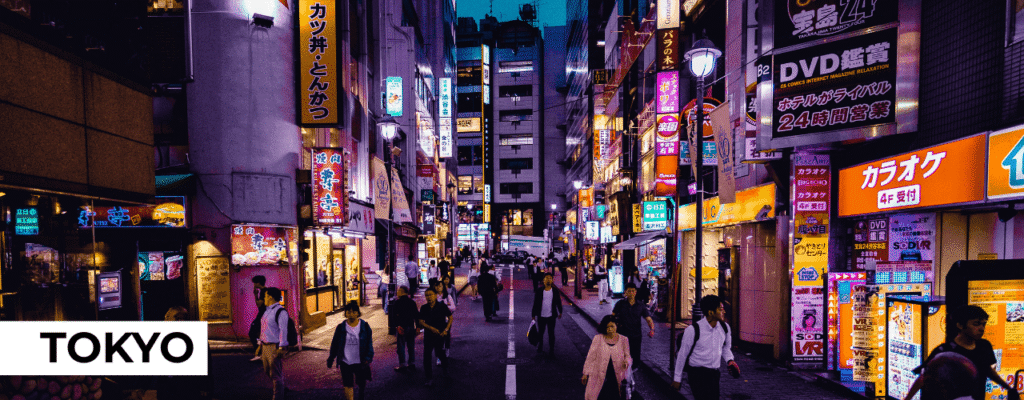
1. Senso-ji Temple and Asakusa
Tokyo’s oldest temple, founded in 645, sits at the end of Nakamise-dori, a 250-metre shopping street lined with stalls selling rice crackers, fans, folding fans and freshly made sweets. You enter beneath the enormous Kaminarimon (Thunder Gate) and its iconic red lantern, pass the smoking incense cauldron where visitors waft the smoke over themselves for good health, and arrive at the main hall and five-storey pagoda.
Asakusa is the heart of shitamachi, or old downtown Tokyo, and it keeps a low-rise, traditional feel that the glassy rest of the city has mostly lost. It is the perfect first stop for getting your bearings, and it sits right on the Sumida River with Tokyo Skytree looming just across the water.
- Where: Asakusa, north-east Tokyo. Nearest station: Asakusa (Ginza, Asakusa and Tobu lines).
- Best time to visit: Early morning before 8am to walk Nakamise-dori before the stalls and tour groups arrive, or after dark when the temple and gate are floodlit and atmospheric.
- How to get there: A two-minute walk from Asakusa Station; about 20 minutes by Ginza Line metro from central Tokyo. The temple grounds are always open.
- Cost: Free to enter the temple and grounds.
- Time needed: 1-2 hours for the temple and Nakamise-dori, or a half day if you explore wider Asakusa.
- Combine it with: Tokyo Skytree (a 20-minute walk over the river), Kappabashi ‘kitchen town’ for knives and tableware, and a Sumida River cruise down to Hamarikyu Gardens or Odaiba.
- Tip: Draw an omikuji paper fortune for 100 yen – if you get a bad one, tie it to the rack provided to leave the bad luck behind.
2. Shibuya Crossing and Shibuya Sky
Shibuya Crossing is the world’s busiest pedestrian scramble – when the lights turn red in every direction, up to 3,000 people surge across at once beneath a wall of giant video screens. It is the quintessential image of modern Tokyo, and standing in the middle of it is a genuine rite of passage.
For the bigger picture, ride up to Shibuya Sky, the open-air rooftop observation deck on the 47th floor of Shibuya Scramble Square. It gives a dizzying, glass-edged view straight down over the crossing and, on a clear day, all the way to Mt Fuji at sunset. The surrounding area is the city’s youth-culture engine, full of fashion, music and food.
- Where: Shibuya, central Tokyo. Nearest station: Shibuya (the Hachiko exit puts you right at the crossing).
- Best time to visit: Evening for the crossing, when the neon is brightest; book Shibuya Sky for the sunset slot to catch both the city lights coming on and a chance of Fuji.
- How to get there: Directly outside Shibuya Station; about 5 minutes by train from Shinjuku or Harajuku.
- Cost: The crossing is free. Shibuya Sky is around 2,500 yen (a little cheaper booked online in advance).
- Time needed: 1-2 hours, longer if you shop or eat in the area.
- Combine it with: Meiji Jingu shrine and the Harajuku fashion streets (one stop away), the Hachiko dog statue, and Nonbei Yokocho’s tiny bars for the evening.
- Tip: For a free view of the crossing, head to the Mag’s Park rooftop above the Magnet building, or the second-floor Starbucks – both look straight down on it.
3. teamLab digital art museums
teamLab’s immersive digital-art museums are among the most-visited attractions in all of Japan, and Tokyo has two completely different ones. teamLab Borderless, at the Azabudai Hills complex, is a map-less labyrinth where artworks drift between rooms, climb the walls and respond to your movement – you simply wander and let it unfold. teamLab Planets, in Toyosu, is a barefoot journey where you wade through knee-deep water, walk across mirrored floors and lie beneath shifting projections.
Both are extraordinary, photogenic and unlike anything else on your trip. If you only have time for one, Borderless is more central and easier to slot in, while Planets is the more hands-on, full-body experience and was expanded with new rooms and a ramen restaurant in 2026.
- Where: Borderless: Azabudai Hills, Minato (nearest station Kamiyacho on the Hibiya Line). Planets: Toyosu (nearest Shin-Toyosu, or a 10-minute walk from Toyosu Station).
- Best time to visit: Book the very first slot of the day or the last couple of hours before closing for the thinnest crowds; midweek is much quieter than weekends.
- How to get there: Both are easily reached on the Tokyo metro or Yurikamome lines from central Tokyo.
- Cost: Borderless around 3,800 yen; Planets around 3,200 yen. Both are timed-entry and frequently sell out.
- Time needed: 2-3 hours for Borderless; 1-2 hours for Planets (the 2026 expansion can stretch it longer).
- Combine it with: From Borderless: Tokyo Tower, Roppongi and the Mori Art Museum. From Planets: Toyosu Market (the successor to Tsukiji) and the Lalaport shopping mall.
- Tip: Book online in advance and wear dark, plain clothing for the mirror rooms. At Planets, wear shorts or trousers you can roll above the knee, as you will be wading through water.
Mt Fuji, Japan
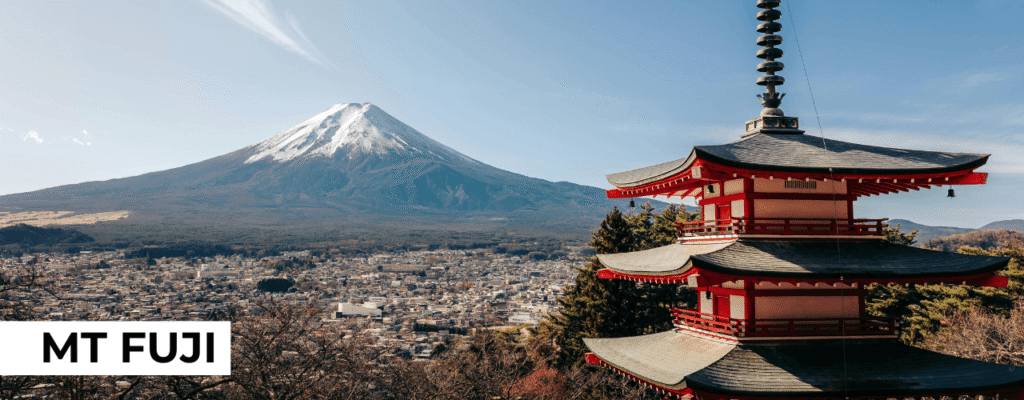
4. The classic Fuji view from Lake Kawaguchiko and Chureito Pagoda
The most iconic views of Mt Fuji are not from the mountain itself but from across the lakes at its base. Lake Kawaguchiko, the most accessible of the Fuji Five Lakes, serves up postcard reflections of the peak from its northern shore, especially around Oishi Park. A short distance away, the five-storey Chureito Pagoda framed against Fuji – reached by climbing nearly 400 steps above Arakurayama Sengen Park – is one of the most photographed scenes in the whole country.
This is a place to slow down: cycle the lakeshore, ride the Kachi Kachi ropeway for a higher viewpoint, or simply find a cafe with a Fuji view and wait for the cloud to clear. Fuji is famously shy, so flexibility pays off.
- Where: The Fuji Five Lakes area, Yamanashi. Kawaguchiko Station for the lake; Shimo-Yoshida Station for Chureito Pagoda.
- Best time to visit: Clear early mornings from autumn through winter, when the air is crispest and Fuji is least likely to be wrapped in cloud. In humid September the mountain often hides by midday, so aim for dawn.
- How to get there: Direct highway bus from Shinjuku to Kawaguchiko (about 2 hours, around 2,200 yen), or the Fuji Excursion limited express train. A sightseeing loop bus links the main viewpoints around the lake.
- Cost: Free to visit the lakeshore and the pagoda; the ropeway is around 900 yen return.
- Time needed: A half to full day, or an overnight stay to maximise your chances of a clear morning.
- Combine it with: Oishi Park (lavender and Fuji), Oshino Hakkai (spring-fed ponds and thatched houses), and the Fuji-Q Highland theme park.
- Tip: Check a live Mt Fuji webcam the night before. If the summit is clear, prioritise this; if it is socked in, swap your plans around and try again the next morning.
5. Soak in the hot springs of Hakone
Hakone is the easiest onsen escape from Tokyo and a brilliant place to combine hot springs, lake scenery and, on a clear day, Mt Fuji. The famous ‘Hakone Loop’ is a half-day circuit using a mountain railway, a funicular, a ropeway gliding over the steaming, sulphurous Owakudani valley, and a pirate-ship cruise across Lake Ashi towards the red torii gate of Hakone Shrine standing in the water.
Beyond the loop, Hakone is dense with things to do: the excellent Open-Air Museum with its Picasso pavilion and Henry Moore sculptures, riverside hot-spring baths, and dozens of ryokan where you can soak away the day. It is one of the most restorative stops you can build into a Japan trip.
- Where: Hakone, Kanagawa, within the Fuji-Hakone-Izu National Park. Gateway station: Hakone-Yumoto.
- Best time to visit: Autumn for the foliage, and any clear day for Fuji views over Lake Ashi. Weekdays are far quieter than weekends and holidays.
- How to get there: Odakyu Romancecar from Shinjuku to Hakone-Yumoto in about 85 minutes, then the loop transport onward.
- Cost: The Hakone Free Pass is around 6,100 yen for 2 days from Shinjuku and covers the entire loop; ryokan, baths and the museum are extra.
- Time needed: A long day trip is possible, but an overnight stay in a ryokan is far more rewarding.
- Combine it with: The Hakone Open-Air Museum, the Owakudani ‘black eggs’ boiled in the volcanic springs, and the lakeside Hakone Shrine torii gate.
- Tip: Stay a night in a ryokan with its own onsen – it is the single most relaxing thing on my whole itinerary, and solo midweek rates can be surprisingly reasonable.
6. Climb Mt Fuji
Climbing Japan’s sacred 3,776m peak is a genuine bucket-list experience, traditionally done overnight so you reach the summit for goraiko – the sunrise breaking above a vast sea of clouds. The climb is non-technical, with no ropes or scrambling required, but the altitude and the loose volcanic scree make it genuinely demanding, and the weather at the top can be near-freezing even in summer.
The rules tightened significantly in recent years to ease dangerous overcrowding. You now pay a mandatory fee, reserve your entry online, and cannot start a ‘bullet climb’ through the night without a hut booking. Done properly – with a night’s rest at a mountain hut around the 7th or 8th station – it is unforgettable.
- Where: The Yoshida Trail (the most popular and best-served) starts at the Fuji Subaru Line 5th Station, accessed via Kawaguchiko.
- Best time to visit: The official season is short: 1 July to 10 September 2026 for the Yoshida and Subashiri trails. Outside these dates the huts close and the mountain becomes dangerous, so a late-September trip like mine just misses the window. Climb midweek to avoid the worst crowds.
- How to get there: Bus from Kawaguchiko or Fujisan Station to the 5th Station (about 50 minutes, around 2,000 yen one way), or a direct climbing-season bus from Shinjuku.
- Cost: A mandatory 4,000 yen trail fee, plus roughly 10,000-17,600 yen for a mountain hut with dinner and breakfast, and around 2,000 yen each way for the bus.
- Time needed: Two days: ascend in the afternoon, sleep at a hut, summit for sunrise, then descend.
- Combine it with: Spend the day before at Lake Kawaguchiko to acclimatise and enjoy the views before you climb.
- Tip: Book your trail slot and your mountain hut separately and early – huts sell out within hours of opening. Pack proper boots, warm layers and a head torch; rangers can turn away the ill-equipped.
Fukushima, Japan
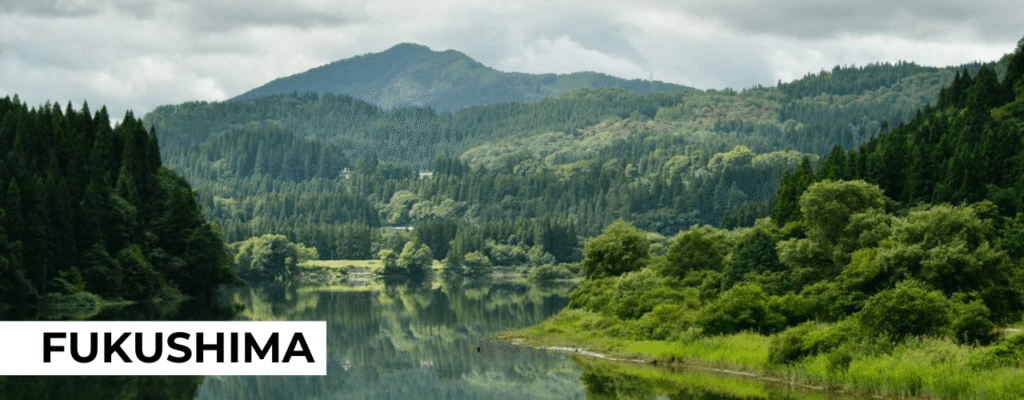
7. Step back in time at Ouchi-juku
One of Japan’s most atmospheric villages, Ouchi-juku is a beautifully preserved Edo-era post town where thatched-roof houses line a wide, unpaved street with not a single overhead wire in sight. It grew up in the 1640s as a rest stop on the trade route between Aizu and Nikko, and today its protected streetscape feels like stepping straight onto a period film set.
Walk the main street browsing craft shops and snack stalls, then climb the short path to the hilltop shrine for the classic postcard view looking down over the thatched roofs. In winter the village is buried in snow and lit by lanterns; in summer it is wreathed in deep mountain green.
- Where: The south-western mountains of Fukushima, in the Aizu region.
- Best time to visit: Gorgeous year-round: lush green in summer, fiery foliage in autumn, and famously magical under snow in winter, when February light-up festivals take place.
- How to get there: From Aizu-Wakamatsu, take the Aizu Railway to Yunokami Onsen (about 30 minutes), then the seasonal Saruyu-go shared bus or a taxi (10-20 minutes). Aizu-Wakamatsu is roughly 3 hours from Tokyo via shinkansen to Koriyama, then the Ban’etsu West Line.
- Cost: Free to wander; you only pay for food and any shops or small museums you enter.
- Time needed: A half day in the village, plus the travel time from Aizu-Wakamatsu.
- Combine it with: The To-no-Hetsuri river cliffs (a short hop on the same line) and the photogenic thatched-roof Yunokami Onsen Station.
- Tip: Try the local negi soba – buckwheat noodles served with a single long spring onion that you use in place of chopsticks, then nibble as a garnish.
8. Tsuruga Castle, Aizu-Wakamatsu
Tsuruga Castle (Tsurugajo) was the stronghold of the Aizu clan, samurai who stayed loyal to the shogun and withstood a month-long siege during the 1868 Boshin War that ended the samurai era. The keep you see today is a 1960s reconstruction, but it is the only castle in Japan crowned with distinctive red roof tiles, restored in 2011 to match its historic appearance.
Inside, a museum displays the swords, armour and stories of the clan, and the top floor gives views over the city and surrounding mountains. The moated park around it is one of Tohoku’s finest cherry-blossom spots and the centre of Aizu-Wakamatsu’s rich samurai heritage.
- Where: Central Aizu-Wakamatsu, Fukushima.
- Best time to visit: Mid-April for cherry blossom, and late September for the Aizu Festival with its 500-strong samurai procession. The castle is open year-round.
- How to get there: About a 15-minute walk from Aizu-Wakamatsu Station, or hop on the Haikara-san loop bus that links the city’s main sights.
- Cost: Entry to the keep is around 410 yen; the surrounding park is free. A loop-bus day pass is about 600 yen.
- Time needed: 1-1.5 hours for the castle, or a full day to take in Aizu-Wakamatsu’s wider samurai sites.
- Combine it with: The Sazaedo, a quirky temple with a double-helix staircase on nearby Mt Iimori; the Aizu Bukeyashiki samurai residence; and a tasting at one of Aizu’s historic sake breweries.
- Tip: Aizu-Wakamatsu’s sights are spread out, so buy the loop-bus day pass and plan a logical circuit rather than backtracking.
9. Goshiki-numa, the Five Coloured Lakes
The ‘Five Coloured Lakes’ are a string of volcanic ponds in the Urabandai highlands, created when Mt Bandai erupted in 1888. Their mineral content gives each one a different, almost unreal hue – cobalt, emerald, turquoise, even reddish – and the colours shift with the weather and the angle of the light.
A gentle, well-marked walking trail links the ponds through forest at the foot of the mountain, making this one of the most accessible nature walks in Tohoku. You can also hire a rowing boat on the largest pond, Bishamon-numa, for a different perspective.
- Where: Urabandai, northern Fukushima, near Lake Inawashiro and Mt Bandai.
- Best time to visit: Late spring through autumn, when the colours pop against fresh green or autumn foliage. The trail is snow-covered in winter, when snowshoe tours run instead.
- How to get there: From Aizu-Wakamatsu or Inawashiro Station, take a bus to the Goshiki-numa Iriguchi trailhead. The full walk is about 3.6km and takes around 70 minutes one way.
- Cost: Free to walk the trail; a rowing boat on Bishamon-numa is around 1,000 yen for 30 minutes.
- Time needed: 1.5-2 hours for the full walk one way (arrange your return bus, or walk back).
- Combine it with: Lake Inawashiro, Japan’s fourth-largest lake, and the scenic Bandai-Azuma Skyline mountain road.
- Tip: Bishamon-numa, the first and largest pond from the entrance, is the most vivid – visit on a sunny day for the strongest colours.
Kyoto, Japan
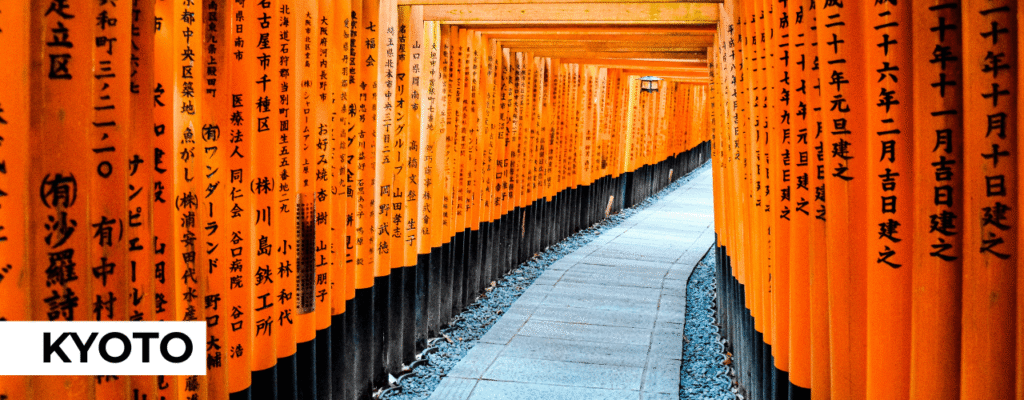
10. Fushimi Inari Taisha
Thousands of vermilion torii gates wind up the wooded slopes of Mt Inari in a seemingly endless tunnel of orange – the single most unforgettable image many people take home from Japan. Each gate was donated by a business or individual praying for success, with the donor’s name inscribed on the back, and new ones are added all the time.
The shrine at the base honours Inari, the Shinto deity of rice, sake and prosperity, watched over by stone fox statues believed to be the god’s messengers. The full loop to the 233-metre summit takes 2-3 hours, but the densest, most magical stretch of gates comes in the first 30 minutes.
- Where: Southern Kyoto. Nearest stations: Inari (JR Nara Line) or Fushimi-Inari (Keihan Line).
- Best time to visit: At dawn or after dark you can have whole stretches of the gates almost to yourself; the middle of the day is shoulder-to-shoulder.
- How to get there: Just 5 minutes by JR from Kyoto Station to Inari, which sits right at the shrine entrance.
- Cost: Free, and open 24 hours.
- Time needed: 1 hour for the lower gates, or 2-3 hours for the full summit loop.
- Combine it with: Tofuku-ji, a Zen temple famed for its autumn maples, is one stop away; the Fushimi sake district, with its tasting cellars, is a little further south.
- Tip: You do not need to climb all the way up – the crowds thin dramatically past the Yotsutsuji viewpoint about halfway, a natural turnaround with a view back over Kyoto.
11. Arashiyama Bamboo Grove
Walking through the towering green corridors of the Arashiyama Bamboo Grove is a quintessential Kyoto experience – the stalks soar overhead and the light filters through in shifting shades of green, with a distinctive rustle when the wind moves through. The grove itself is short, so it is the surrounding district that turns it into a half-day.
Right beside it sits Tenryu-ji, a UNESCO-listed Zen temple whose garden, designed in the 14th century, is considered one of Japan’s finest. Beyond are the Iwatayama monkey park, the riverside at Togetsukyo Bridge, and the lovely Okochi Sanso villa and garden.
- Where: Arashiyama, north-west Kyoto. Nearest stations: Saga-Arashiyama (JR) or Arashiyama (Randen tram and Hankyu lines).
- Best time to visit: Arrive by 8am – the path is narrow and gets very crowded later in the day. Autumn is spectacular in the surrounding hills.
- How to get there: About 15-20 minutes by JR from Kyoto Station to Saga-Arashiyama, then a short walk.
- Cost: The grove is free; Tenryu-ji is around 500 yen (a little more to enter the temple buildings).
- Time needed: A half day to enjoy the grove, a temple and the riverside.
- Combine it with: Tenryu-ji and its garden (which backs onto the grove), the Iwatayama monkey park, and the scenic Sagano Romantic Train through the river gorge.
- Tip: Pair the early grove visit with Tenryu-ji, then exit through the temple’s north gate, which leads you straight into the quietest part of the bamboo.
12. Kiyomizu-dera and the Higashiyama lanes
Kiyomizu-dera is a vast wooden temple that juts out over the hillside on a platform supported by enormous pillars – famously built without a single nail – giving sweeping views across Kyoto, especially at cherry-blossom and autumn-leaf time. Below it, the Otowa waterfall lets visitors drink from three streams said to grant health, success or love.
Half the joy is the approach. The stone-paved lanes of Sannenzaka and Ninenzaka climb up to the temple lined with machiya townhouses, tea shops and craft stores, and the same network of streets leads on to Gion, Kyoto’s historic geisha district. It is some of the most beautiful walking in the country.
- Where: Eastern Kyoto (Higashiyama). Nearest station: Kiyomizu-Gojo (Keihan), then a 20-minute walk uphill.
- Best time to visit: Early morning for the temple itself; dusk for Gion, when the lanterns glow and you might glimpse a geiko or maiko on the way to an appointment.
- How to get there: Bus 100 or 206 from Kyoto Station, or the Keihan line to Kiyomizu-Gojo and a walk uphill.
- Cost: Entry to Kiyomizu-dera is around 500 yen; the streets and Gion are free to wander.
- Time needed: 2-3 hours to combine the temple, the Higashiyama lanes and a stroll through Gion.
- Combine it with: Yasaka Shrine and Maruyama Park at the foot of the hill, the elegant Kodai-ji temple, and the Gion geisha quarter for the evening.
- Tip: Be respectful in Gion: photography of geisha in the private streets is restricted and fines apply on some alleys, so keep to the main thoroughfares.
Nara, Japan
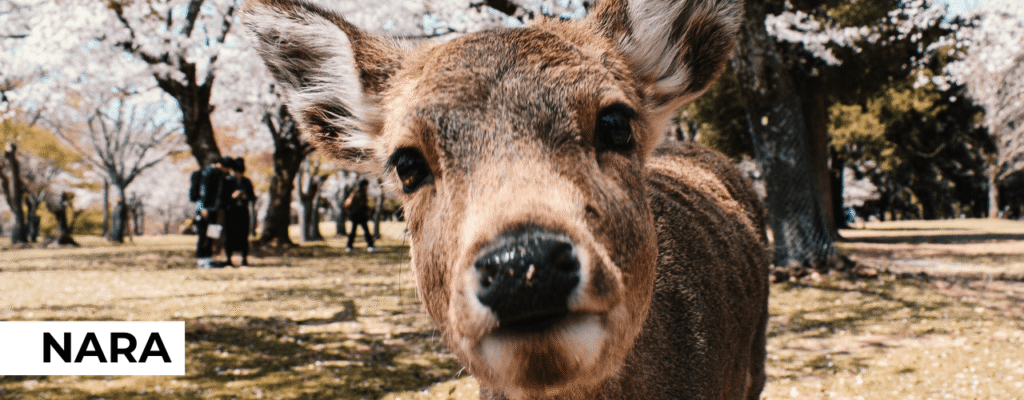
13. Meet the bowing deer in Nara Park
Nara’s great park is home to more than a thousand semi-wild sika deer, considered messengers of the gods and protected for centuries. Many have learned to bow their heads in exchange for a cracker, and being surrounded by a polite (and occasionally pushy) crowd of them is one of the most charming experiences in Japan.
The park is huge and green, dotted with Nara’s most important temples and shrines, so the deer are really the gateway to a wonderful half-day on foot. As Japan’s first permanent capital in the 8th century, Nara is older than Kyoto and wears its history lightly.
- Where: Central Nara, a short walk east of the JR and Kintetsu stations.
- Best time to visit: Early morning is calm and the deer are at their friendliest; it gets busy with school groups around midday.
- How to get there: About 45 minutes from Kyoto or Osaka by train (Kintetsu is fastest), then a 5-15 minute walk into the park.
- Cost: The park is free; deer crackers (shika senbei) are around 200 yen from licensed vendors.
- Time needed: A half day covers the deer, Todai-ji and Kasuga Taisha comfortably.
- Combine it with: Todai-ji and Kasuga Taisha (both below), the serene Isuien Garden, and the old merchant streets of Naramachi.
- Tip: Keep the crackers hidden until you are ready to hand them out, as the deer are bold and will nudge and crowd you the moment they see them.
14. Todai-ji and the Great Buddha
Todai-ji’s Great Buddha Hall (Daibutsuden) is one of the largest wooden buildings in the world, and even that is only two-thirds of its original size. Inside sits the Daibutsu, a 15-metre, 500-tonne bronze Buddha cast in the 8th century – the sheer scale of the figure, with a hand the size of a person, is genuinely humbling.
The temple was once the head of all Buddhist temples in Japan and remains a centre of the Kegon school. The approach through the park, past the towering Nandaimon gate and its fierce guardian statues, builds the sense of occasion.
- Where: Northern edge of Nara Park.
- Best time to visit: Open from early morning – arrive at opening to beat both the crowds and the heat.
- How to get there: A 20-30 minute walk through Nara Park from the stations, or a short bus ride.
- Cost: Entry is around 800 yen.
- Time needed: About 1 hour.
- Combine it with: The Nigatsu-do hall just uphill, with a free veranda viewpoint over Nara, and the Nandaimon gate on the way in.
- Tip: Look for the wooden pillar with a hole the same size as the Buddha’s nostril; squeezing through it is said to grant enlightenment, and it is a favourite with children.
15. Kasuga Taisha and its lanterns
Nara’s most celebrated shrine is reached through atmospheric forest and is famous for its thousands of lanterns – bronze ones hanging from the eaves and stone ones lining the approach paths, donated by worshippers over many centuries. Twice a year they are all lit at once for the Lantern Festivals, a magical sight.
Founded in 768 as the tutelary shrine of the powerful Fujiwara clan, its vermilion buildings glow against the dark green of the surrounding primeval forest. It makes a quieter, more contemplative counterpoint to the bustle of the deer lawns.
- Where: Eastern side of Nara Park, at the foot of the sacred Mt Mikasa.
- Best time to visit: Early or late in the day for soft light through the trees. The lanterns are all lit during festivals in early February (Setsubun) and mid-August (Obon).
- How to get there: A pleasant 20-30 minute walk through the park from the deer lawns, or a short bus from Nara Station.
- Cost: The outer grounds are free; the inner sanctuary costs around 500 yen.
- Time needed: About 1 hour.
- Combine it with: The Kasugayama Primeval Forest behind the shrine, and the Manyo Botanical Garden next door.
- Tip: The walk in past the moss-covered stone lanterns is half the experience – take it slowly rather than rushing to the main hall.
Osaka, Japan

16. Eat your way through Dotonbori
Osaka’s neon-soaked heart, Dotonbori is a canal-side strip of giant illuminated signs – including the famous Glico running man and a huge mechanical crab – packed with street-food stalls and restaurants. Osaka calls itself ‘the nation’s kitchen’, and this is ground zero for its food culture, summed up by the local motto kuidaore, or ‘eat until you drop’.
Come hungry and graze: takoyaki (molten octopus balls), okonomiyaki (savoury pancakes cooked on a hotplate), kushikatsu (deep-fried skewers) and more. The energy after dark, with the signs reflected in the canal, is unmistakably Osaka – louder, friendlier and more freewheeling than Tokyo or Kyoto.
- Where: Namba, central Osaka. Nearest station: Namba.
- Best time to visit: After dark, when the neon is at full blast and the atmosphere peaks.
- How to get there: A few minutes from Namba Station, or about 10-15 minutes by metro from Osaka/Umeda.
- Cost: Free to wander; budget a few hundred yen per street-food item.
- Time needed: 1-2 hours in the evening, more if you sit down for a meal.
- Combine it with: The covered Shinsaibashi shopping arcade, the Kuromon Ichiba food market, and the retro Shinsekai district with its Tsutenkaku tower.
- Tip: Graze across several stalls rather than committing to one big meal – sampling lots of small things is the whole point of eating in Osaka. Remember the ‘no rule’ on kushikatsu: never double-dip your skewer in the shared sauce.
17. Osaka Castle
One of Japan’s most famous landmarks, Osaka Castle is a striking reconstruction of the 16th-century fortress built by the warlord Toyotomi Hideyoshi, who unified Japan. It rises on massive stone ramparts within a broad double moat, set in a large park that is a local favourite for picnics and cherry blossom.
The eight-storey keep houses a well-presented museum on Hideyoshi and the castle’s turbulent history, and the top floor opens onto wide views across the modern city. Even if you do not go inside, the approach over the moats and up through the stone walls is impressive.
- Where: Chuo ward, central Osaka.
- Best time to visit: Spring for cherry blossom in the surrounding park, and any clear day for the views from the top floor.
- How to get there: Several stations ring the park; Osakajokoen on the JR Loop Line is the handiest, then a 15-minute walk through the grounds.
- Cost: Entry to the keep is around 600 yen; the park is free.
- Time needed: 1.5-2 hours including the walk through the grounds.
- Combine it with: The Nishinomaru Garden (great castle photos), the Osaka Museum of History opposite, and a relaxing Osaka Castle moat boat ride.
- Tip: The park and the castle’s exterior are free and genuinely lovely, so you can skip the paid interior if you are short on time and still get the best of it.
18. Universal Studios Japan and Super Nintendo World
Universal Studios Japan is one of the most-visited theme parks on earth, and its Super Nintendo World – a fully realised, interactive Mario land complete with a Mario Kart ride, power-up bands and warp pipes – is the headline draw for many visitors. It is the kind of immersive detail that even non-gamers find delightful.
The rest of the park is no slouch either, with the Wizarding World of Harry Potter, Minion Park and a strong line-up of thrill rides and shows. It is an easy, exhilarating full day, and a fun change of pace from temples and shrines.
- Where: Konohana ward, on Osaka Bay.
- Best time to visit: Weekdays and outside Japanese school holidays for shorter queues. Arrive before the gates open.
- How to get there: JR Yumesaki Line to Universal City Station, about 11 minutes from Osaka Station.
- Cost: One-day tickets start from around 8,600 yen and vary by date; an Express Pass costs extra but saves hours of queuing.
- Time needed: A full day.
- Combine it with: It is a destination in itself, but the bayfront Tempozan area with its giant Ferris wheel and aquarium is a short ferry ride away.
- Tip: Buy a dated ticket in advance, and on busy days secure a timed-entry ticket or area reservation for Super Nintendo World – it often fills up, and an Express Pass that includes it is the surest way in.
Fukuoka, Japan
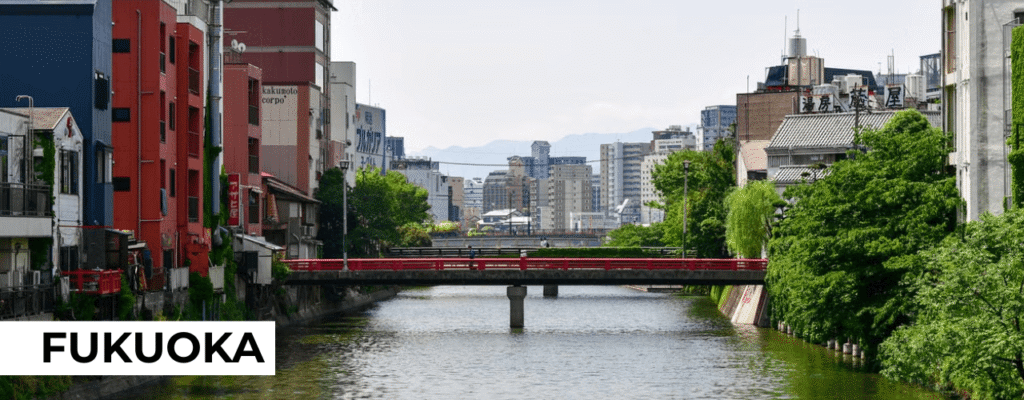
19. Eat at the Hakata yatai street-food stalls
Fukuoka is the home of tonkotsu (pork-bone) ramen, and the most atmospheric way to eat in the city is at its yatai – open-air food stalls that set up along the river and pavements after dark, each seating a handful of people around a tiny counter. You perch on a stool, order a few dishes and a cold beer, and rub shoulders with locals and the chef. There are more yatai here than anywhere else in Japan.
Beyond the signature Hakata ramen – thin, firm noodles in a rich, milky broth – stalls serve yakitori, oden, gyoza and the occasional creative fusion dish. It is sociable, informal and a brilliant experience for a solo traveller, since the counters more or less force a bit of friendly conversation.
- Where: Especially around Nakasu island and the Tenjin district in central Fukuoka.
- Best time to visit: Evenings from around 6pm; most stalls run late. Dry nights are best, since it is all outdoors.
- How to get there: Nakasu-Kawabata Station for the riverside stalls, or walk from Tenjin. Fukuoka’s hub, Hakata Station, is about 5 hours by shinkansen from Tokyo or 2.5 hours from Osaka – though flying from Tokyo (under 2 hours) is often faster and cheaper.
- Cost: Pay per dish; a bowl of ramen is around 800-1,000 yen, and most stalls are cash only.
- Time needed: 1-2 hours in the evening.
- Combine it with: The Canal City shopping and entertainment complex, the Tenjin underground shopping arcade, and Ohori Park with its lakeside loop and the ruins of Fukuoka Castle.
- Tip: Seats are limited and stalls are cash-mostly, so go early in the evening, carry cash, and expect to share a counter with strangers – that is part of the charm.
20. Dazaifu Tenmangu shrine
Dedicated to Sugawara Michizane, a Heian-era scholar revered as the deity of learning, Dazaifu Tenmangu is one of the most important shrines in Japan and draws streams of students praying for exam success. Built over Michizane’s grave, it sits in tranquil grounds with an arched sacred bridge, a pond shaped like the character for ‘heart’, and a bronze ox that visitors rub for wisdom.
The shrine is famous for its 6,000 plum trees – Michizane loved the blossom – which turn the grounds pink and white in late winter. During a multi-year renovation of the main hall, a remarkable temporary shrine has been built with living trees growing across its roof, an attraction in its own right.
- Where: Dazaifu, about 15km from central Fukuoka.
- Best time to visit: Late February to March for the plum blossom the shrine is famous for; it is rewarding and far less crowded the rest of the year.
- How to get there: From Hakata, take the subway to Tenjin then the Nishitetsu line via Futsukaichi to Dazaifu Station (about 30-40 minutes, around 480 yen), or the direct Dazaifu Liner bus (about 40 minutes, 800 yen). The shrine is a 5-minute walk from the station.
- Cost: Free to enter the shrine grounds; the on-site museums charge a small fee.
- Time needed: A half day including the trip out and back.
- Combine it with: The Kyushu National Museum (reached by a long escalator behind the shrine), the moss garden at Komyozenji, and the striking Kengo Kuma-designed Starbucks on the approach street.
- Tip: Walk the approach street (sando) and try a freshly grilled umegae-mochi, the local plum-stamped rice cake, eaten warm.
21. The Nanzoin reclining Buddha
Tucked into the wooded hills of Sasaguri, Nanzoin is home to one of the largest bronze statues in the world: a 41-metre, 300-tonne reclining Buddha (Nehanzo) depicting the moment he entered nirvana. Cast in 1995 to house relics gifted by Myanmar, it is so large that walking its length, then round to the intricately detailed soles of the feet, takes real time to absorb.
The statue is only the centrepiece. Nanzoin is the first temple on the Sasaguri 88 pilgrimage, and its forested grounds are scattered with smaller shrines, mossy stone statues, a cave altar and the Shichifukujin tunnel of the Seven Lucky Gods. It is calm, green and a world away from the city.
- Where: Sasaguri, Kasuya district, about 20-25 minutes east of central Fukuoka.
- Best time to visit: Morning for the best light on the statue’s face and a peaceful atmosphere before any tour groups arrive. Open 9am to 5pm year-round.
- How to get there: JR Sasaguri (Fukuhoku Yutaka) Line from Hakata Station to Kido-Nanzoin-mae (about 20-26 minutes, 380 yen), then a 3-5 minute walk.
- Cost: The grounds are free; the prayer room beneath the Buddha (which holds the relics) is around 500 yen.
- Time needed: 2-3 hours including the train out and back.
- Combine it with: The wider Sasaguri 88 pilgrimage trail through the surrounding hills, for those who want a longer walk.
- Tip: Dress modestly – it is an active place of worship – and hold the coloured cords tied to the Buddha’s hand as you make a wish, following the local custom.
How to fit these into a trip
You could not sensibly do all 21 in one visit unless you had three weeks or more. For a first two-week trip I would focus on Tokyo, Mt Fuji, Kyoto, Nara and Osaka – the classic ‘Golden Route’ – and add Fukushima or Fukuoka only if you have spare days or a particular draw to them. To work out what your own version costs, I run mine through my solo travel budget calculator.
Frequently asked questions
Tokyo, Kyoto and Osaka are the essential trio, ideally with a Mt Fuji view (via Hakone or Lake Kawaguchiko) and a half-day with the deer in Nara. Fukushima and Fukuoka are excellent additions for a second trip or if you have extra time.
Comfortably the Tokyo, Mt Fuji, Kyoto, Nara and Osaka cluster – roughly 12 to 15 of these items – at a relaxed pace. Adding Fukushima or Fukuoka means either dropping something or extending the trip.
No. Almost everything here is reachable by train and bus. Even the rural spots, like Ouchi-juku and Goshiki-numa in Fukushima, connect via local railways and seasonal buses.
Hakone, Lake Kawaguchiko, Nara, Dazaifu and Nanzoin are all easy day trips from a nearby city base. Fukushima’s Aizu sights are better enjoyed as an overnight, given the travel time.
Late spring (late March to April) and autumn (October to November) give the best balance of weather and scenery. Individual sites have their own ideal seasons, noted throughout this list
That is my shortlist of the best things to do in Japan. Many of these are on my own September 2026 itinerary, and I will be updating as I go. If Japan is one leg of a bigger adventure, see my wider solo travel in Asia hub.
Please note: Opening hours, fares and entry fees reflect mid-2026 and can change – always check official sites before you visit, especially for seasonal transport and timed-entry tickets.