
Riga Central Market: What to Eat and How to Avoid Tourist Prices
Quick answer: At Riga Central Market, eat smoked fish on rye bread from the fish pavilion (around €4 / £3.50), a couple of hot pīrāgi bacon pastries (€1-2 each) and a plate of pelmeni dumplings (about €6 / £5). To avoid tourist prices, always ask the price per kilo before anything is cut or weighed, compare at least three stalls, shop deeper inside the pavilions rather than at the entrances, and carry some cash in small notes.
I was born in Latvia, and Riga Central Market (Rīgas Centrāltirgus) is still the first place I go whenever I'm back. It's not a tourist attraction dressed up as a market - it's where Riga actually does its grocery shopping. That's exactly why it's one of the best-value places to eat in the Baltics, as long as you know what to order and how locals buy.
The catch is that the market can feel overwhelming on a first visit. There are five enormous halls, hundreds of stalls, very few English signs, and almost everything is sold by weight. Most visitors either wander in, take a few photos and leave without eating anything, or buy the first thing they see at whatever price they're quoted. Neither is the best way to experience it.
This Tom Solo Travels guide covers what to eat, what it should cost, when to go, how buying by weight works, what's in season, and the simple habits that stop you paying the "tourist tax". It's written for first-time visitors and solo travellers, but it works just as well if you're travelling as a couple or a group.
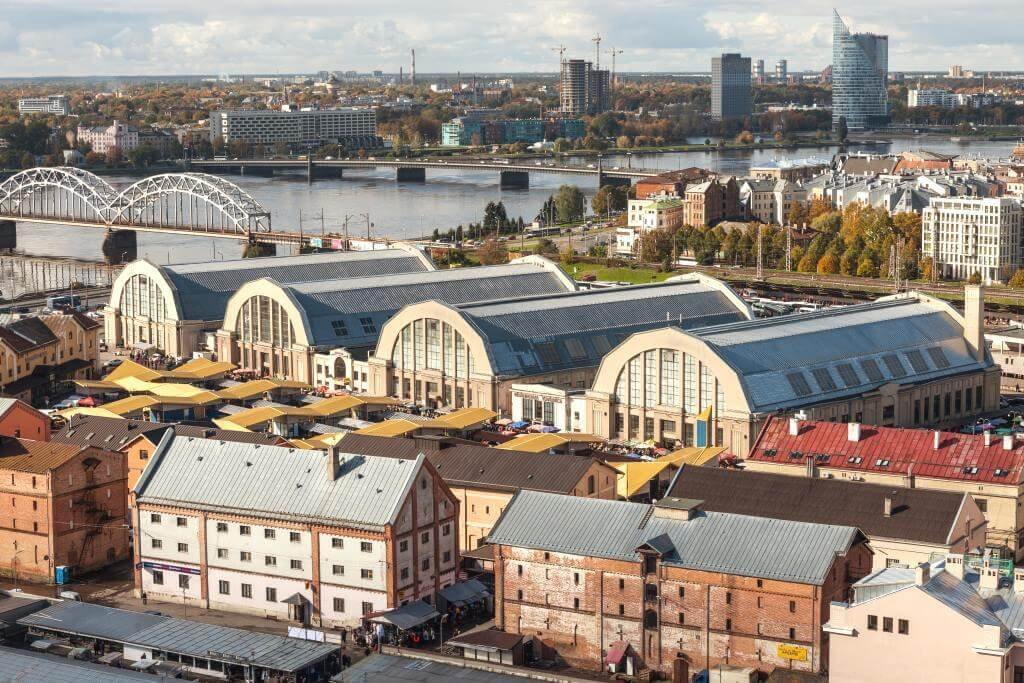
Riga Central Market: key facts
- Address: Nēģu iela 7, Riga - next to the bus station, Central Railway Station and Old Town
- Pavilion hours: roughly 07:30-17:00 daily
- Outdoor stalls: roughly 07:00-18:00 daily
- Watch out: the indoor pavilions close on the first Monday of every month for a sanitary day (outdoor trading carries on)
- Entry: free
- Payment: cards widely accepted, but cash is still handy at smaller stalls
- UNESCO: part of the Historic Centre of Riga World Heritage Site
What is Riga Central Market?
Riga Central Market is one of the largest markets in Europe, housed inside five former German zeppelin hangars on the edge of Old Town. It opened in 1930, and at the time it was one of the biggest and most modern marketplaces on the continent.
Each pavilion has its own speciality - meat, fish, dairy, vegetables and gastronomy - with outdoor stalls selling fruit, flowers, berries, clothes and odds and ends around them. Locals do their weekly shop here, which keeps prices honest in most places, but the stalls nearest the main entrances and Old Town side see the most tourists.
A short history: why is the market in zeppelin hangars?
Riga's old riverside market had outgrown itself by the early 20th century, and the city began planning a modern replacement as early as 1910. After the First World War, Latvia's new government bought surplus German army zeppelin hangars from the Courland town of Vaiņode, dismantled them and rebuilt them on the banks of the Daugava. Construction finished in 1930, and the result was one of the largest and most advanced markets in Europe at the time.
The market has kept trading through Latvian independence, Soviet occupation and the return of independence in 1991. In 1997-1998 it was included in the UNESCO World Heritage listing for the Historic Centre of Riga, and it remains one of the most important early 20th-century buildings in the country.
What is in each pavilion at Riga Central Market?
The five pavilions run side by side, roughly parallel to the river. Knowing what's where saves you wandering in circles - here's a quick pavilion-by-pavilion guide.
| Pavilion | What you'll find | Go here for |
|---|---|---|
| Fish pavilion | Fresh Baltic fish, smoked sprats, eel, trout, bream, salted herring, roe, tinned fish, seafood salads | The best lunch in the market and the best edible souvenirs |
| Gastronomy pavilion | Bakeries, food stalls, cafés and bars, sweets, delicatessen counters | Pīrāgi, pelmeni, hot meals and a sit-down break |
| Meat pavilion | Fresh pork, beef, poultry, smoked sausages, smoked bacon (speķis) | Picnic supplies and Latvian smoked meats |
| Dairy pavilion | Farmer's cheese (biezpiens), caraway cheese, sour cream, kefir, eggs | Trying local cheeses and dairy |
| Vegetable pavilion | Fruit, vegetables, pickles, sauerkraut, honey, dried mushrooms, herbs | Pickles, honey and seasonal produce |
| Outdoor area | Berries, mushrooms, flowers, clothes, household goods, plants | Summer berries, chanterelles and people-watching |
Pavilions don't always have big signs in English, so use your nose: the fish pavilion is impossible to miss.
What should you eat at Riga Central Market?
Start with smoked fish - it's the single best thing to eat here. After that, work your way through the bakery counters, the dumplings and whatever is in season outside. Here's my shortlist.
1. Smoked sprats and smoked fish on rye
The fish pavilion is the star of the whole market. Look for alder-smoked Baltic sprats (šprotes), smoked eel, trout and bream. The classic way to eat it is on dark rye bread, sometimes with onion and boiled egg. Buy a small piece of fish and a slice of bread, eat it standing up outside, and you've had one of the best lunches in Riga for about €4.
Don't be put off if you're not usually a fish person. Smoked Baltic fish is milder and less oily than many people expect, and vendors will usually let you try a small piece first. Hot-smoked fish (soft, flaky and ready to eat) is the easiest place to start, while cold-smoked and salted fish have a firmer texture and stronger flavour. If you only try one thing, make it hot-smoked sprats on rye.
2. Pīrāgi (bacon and onion pastries)
Soft, crescent-shaped buns filled with diced bacon and onion. They're Latvia's most loved snack, and they're best hot from the oven in the morning. Expect to pay around €1-2 each.
3. Sklandrausis (carrot and potato rye pie)
A small, open rye-crust pie topped with sweet mashed carrot and potato, often with a touch of cinnamon or caraway. It comes from the Suiti region of western Latvia and has EU protected status. Sweet and savoury at the same time - try one even if it sounds odd.
4. Pelmeni and hot food in the gastronomy pavilion
For a proper sit-down meal, head to the food stalls and cafés in the gastronomy pavilion. Pelmeni (meat dumplings, usually with sour cream and dill) are the go-to - a big portion should cost around €6. You'll also find soups, potato pancakes and grey peas with bacon (pelēkie zirņi ar speķi), Latvia's national dish.
5. Pickles, sauerkraut and fermented vegetables
Barrels of pickled cucumbers, sauerkraut, pickled garlic and tomatoes line the vegetable pavilion. Many vendors will happily let you taste before buying.
6. Rupjmaize (dark rye bread)
Dense, slightly sweet black rye bread is the backbone of Latvian food. Buy a small loaf - it keeps for days and pairs with almost everything above.
7. Seasonal berries and honey
In summer and early autumn, the outdoor stalls fill with strawberries, blueberries, lingonberries, chanterelles and sea buckthorn. Local honey, including buckwheat honey, makes a great take-home gift.
8. Kvass (and a cheeky Riga Black Balsam)
Kvass is a lightly fermented, low-alcohol drink made from rye bread - refreshing and very cheap. If you want to try Latvia's famous herbal liqueur, Riga Black Balsam, the market is a cheaper place to pick up a small bottle than the airport.
9. Latvian cheeses and biezpiens
The dairy pavilion is where you'll find caraway-seed cheese (ķimeņu siers), traditionally eaten at Midsummer, and biezpiens, a fresh farmer's cheese that Latvians eat with everything from pancakes to jam. Ask for a small slice to try - many vendors are happy to cut a taster.
10. Smoked meats and speķis
Smoked sausages and speķis (cured, smoked pork fat) are pure Latvian comfort food. Thinly sliced on rye bread with a pickle, they make an excellent picnic. Buy small amounts by weight so you can try a few.
11. Biezpiena sieriņš (sweet curd snack)
Every Latvian grew up on these: small bars of sweetened curd cheese coated in chocolate. The famous ones are in supermarket fridges, but market stalls and dairy counters sometimes sell their own versions. A perfect cheap dessert.
What can vegetarians eat at Riga Central Market?
Latvian food is pork- and dairy-heavy, but vegetarians can still eat well here. Go for sklandrausis, potato pancakes (check they're fried in oil, not lard), rye bread with cheese, pickles and sauerkraut, seasonal fruit and berries, honey and the many baked sweet buns. Vegans will find it harder - fruit, vegetables, pickles and rye bread are your safest bets.
What is the best way to eat your way through the market?
The easiest way to try everything is a self-guided food crawl. This is the route I'd take on a first visit - it takes around 90 minutes and should cost roughly €10-15 (£9-13) for a proper tasting lunch.
- Gastronomy pavilion (start, around 09:30): Grab two hot pīrāgi and a coffee or kvass to start.
- Dairy pavilion: Try a taster of caraway cheese and pick up a biezpiena sieriņš for later.
- Vegetable pavilion: Taste pickles and sauerkraut, and buy a small jar of honey if you want a souvenir.
- Fish pavilion (the main event): Buy a small piece of smoked fish and a slice of rye bread, and eat it on the spot or just outside.
- Bakery counter: Finish with a sklandrausis.
- Outdoor stalls: In summer, end with a punnet of berries to eat while you walk on to the Spīķeri quarter or Old Town.
Sample €10 market lunch: 2 pīrāgi (€3) + smoked fish and rye (€4) + sklandrausis (€1.50) + kvass (€1.50) = about €10, or roughly £8.70. That's less than a single main course in many Old Town restaurants.
How does buying by weight work at Riga Central Market?
Most food at Riga Central Market is sold by the kilo, so understanding how weights work is the key to paying a fair price. Prices are usually shown per kilogram (€/kg), and sometimes per 100 grams for expensive items like eel or caviar. That means a smoked fish showing €18/kg sounds pricey, but a 200g piece only costs around €3.60.
A few useful reference points:
- 100g is a small tasting portion - enough smoked fish for one open sandwich.
- 200-250g is a generous single lunch portion of smoked fish or cheese.
- 500g is enough to share between two or three people for a picnic.
You don't need to speak Latvian to buy the right amount. Hold up your fingers or point to the size you want, or show a number on your phone, for example "200g". Vendors are used to it and it's much clearer than trying to describe a portion. The most common way visitors overpay isn't a dishonest price - it's ending up with a 600g piece of fish when they only wanted a snack.
What is in season at Riga Central Market?
What you'll find at Riga Central Market changes a lot through the year, especially in the outdoor area. Latvians eat very seasonally, so visiting at different times of year can feel like visiting a different market.
- Spring (March-May): The first fresh herbs, rhubarb, radishes and spring onions, plus birch sap (bērzu sula) in early spring - a lightly sweet, refreshing drink tapped from birch trees.
- Summer (June-August): The market at its most colourful. Strawberries, wild blueberries, raspberries, new potatoes, fresh dill and cucumbers, and caraway cheese around Midsummer (Jāņi).
- Autumn (September-November): Mushroom season. Expect chanterelles, porcini and other forest mushrooms, along with lingonberries, cranberries, apples, pumpkins and sea buckthorn.
- Winter (December-February): Fewer fresh fruits, but more pickles, preserves, smoked fish, honey and hearty hot food. In December, look out for gingerbread (piparkūkas) and festive treats.
Smoked fish, rye bread, pīrāgi and pickles are available all year round, so whatever season you visit, you'll still be able to eat the classics.
How much does food cost at Riga Central Market?
Riga Central Market is cheaper than both Old Town restaurants and most supermarkets for fresh, local food. These are typical prices I'd expect to pay in late 2026 - use them as a benchmark so you know when something's off.
| Item | Typical price (€) | Approx. (£) | Where |
|---|---|---|---|
| Smoked fish + rye bread lunch | €4-6 | £3.50-5 | Fish pavilion |
| Pīrāgi (each) | €1-2 | £0.90-1.75 | Gastronomy pavilion bakeries |
| Plate of pelmeni | €5-7 | £4.50-6 | Gastronomy pavilion food stalls |
| Sklandrausis (each) | €1-2.50 | £0.90-2.20 | Bakery counters |
| Glass of kvass | €1-2 | £0.90-1.75 | Drinks stalls |
| Vacuum-packed smoked sprats (souvenir) | €3-8 | £2.60-7 | Fish pavilion |
| Traditional Latvian lunch in Old Town | €8-14 | £7-12 | For comparison |
If a stall quotes you double these figures for the same thing, walk on - there will be another stall selling the same product a few metres away.
How do you avoid tourist prices at Riga Central Market?
Most vendors are honest, but a few stalls in high-traffic spots rely on visitors not knowing how the market works. These habits will keep you paying local prices.
- Ask the price per kilo before anything is cut. Smoked fish, cheese and meat are sold by weight. Once a vendor has cut a large piece, it's awkward to say no. Point to the size you want first, and ask how much it will come to.
- Watch it go on the scale. Make sure the scale starts at zero and you can see the reading. Most stalls display the price per kilo on a tag - if there isn't one, ask.
- Compare at least three stalls. Many stalls sell nearly identical products. Do a slow lap of the pavilion first, then buy.
- Go deeper inside. Stalls right by the entrances and closest to Old Town get the most tourist footfall. Prices often soften towards the back of each pavilion and in the outdoor area.
- Learn two Latvian phrases. "Labdien" (good day) and "Cik maksā?" (how much is it?) go a long way. Riga is bilingual, and many older vendors speak Russian too, but a little Latvian signals that you're not an easy target.
- Be careful with free samples. Tasting is normal, but don't feel obliged to buy a big portion after a sample. A polite "Paldies" (thank you) and moving on is completely fine.
- Carry small notes and coins. Cards are widely accepted, but smaller stalls may prefer cash, and paying with exact change avoids "rounding up".
- Buy souvenirs here, not at the airport. Vacuum-packed smoked fish, rye bread and Black Balsam are noticeably cheaper at the market.
- Skip "too-good-to-be-true" caviar. Unless you know what you're looking at, stick to the local smoked fish - it's what the market does best.
Tom's tip: Mid-morning on a weekday is the sweet spot. The morning bakes are out, the fish counters are fully stocked, and you avoid the weekend crowds. Late afternoon can bring the odd discount on fresh produce, but the best smoked fish and pastries are often gone by then.
Riga Central Market etiquette
- Don't touch the produce unless the vendor invites you to - point and let them pick.
- Ask before taking close-up photos of a stall or vendor. Wide shots of the pavilions are fine.
- Bring your own bag. Plastic bags cost extra, and a tote makes carrying smoked fish much easier.
- Greet before you ask. A quick "Labdien" first is polite and usually gets you friendlier service.
- Don't haggle aggressively. This isn't a bargaining market in the way some Asian markets are. Compare stalls instead - that's how locals keep prices down.
What should you buy at Riga Central Market to take home?
The best souvenirs from Riga Central Market are edible ones that travel well. Check your airline's and country's rules on bringing food back - the UK, for example, restricts some meat and dairy products from outside the country.
- Vacuum-packed smoked sprats or eel - the classic Latvian food gift, and well below airport prices.
- Tinned Riga sprats - easy to pack and long-lasting.
- Rupjmaize rye bread - wrap it well and it'll survive the flight.
- Local honey - check liquid limits if you're only travelling with hand luggage.
- Riga Black Balsam - small bottles are the easiest to pack.
- Dried mushrooms and herbal teas - light, cheap and very Latvian.
Is Riga Central Market safe?
Yes, Riga Central Market is safe to visit during opening hours, including for solo travellers. Like any busy market, pickpocketing can happen in crowded aisles, so keep your phone and wallet in a front pocket or zipped bag. The area around the bus station and market is quieter after dark, so I'd stick to daytime visits unless you're heading to a specific evening event.
When is the best time to visit Riga Central Market?
The best time to visit Riga Central Market is a weekday morning between 09:00 and 11:00. Pastries are fresh out of the oven around 9am, the fish pavilion has its full selection, and it's busy enough to feel lively without being packed.
- Avoid: the first Monday of the month if you want the indoor pavilions - they close for a sanitary day.
- Weekends: busier with locals doing their big shop, which is great for atmosphere.
- Holidays: hours change around Latvian holidays like Jāņi (Midsummer, 23-24 June), so check the official website first.
- Winter: the pavilions are a warm escape from the cold, and hot food stalls come into their own.
How do you get to Riga Central Market?
Riga Central Market is a 5-10 minute walk from Old Town. It sits right beside Riga Bus Station and Central Railway Station, so it's easy to reach on foot from almost anywhere central. From the station, follow signs towards the river and the bus station - you can't miss the curved hangar roofs.
If you're staying further out, several tram and bus routes stop near the market and the station, and Riga's public transport is cheap and easy to use with a contactless bank card or a ticket from the Rīgas Satiksme app. Arriving by train or bus from elsewhere in Latvia, such as Jūrmala or Sigulda? The market is right next to where you'll arrive, so it's a perfect first or last stop, even with luggage.
What is there to do near Riga Central Market?
The market is a great first stop because so much of Riga is within a short walk. Combine it with any of these:
- Spīķeri Creative Quarter - restored red-brick warehouses right next to the market, with cafés, galleries and a relaxed riverside feel.
- Latvian Academy of Sciences - the Stalinist "wedding cake" building nicknamed "Stalin's birthday cake", with an observation deck offering one of the best views over the market roofs.
- Riga Old Town - a 5-10 minute walk away, with the House of the Blackheads, St Peter's Church and Riga Cathedral.
- The Daugava riverside - a good spot to eat your market picnic on a sunny day.
- Āgenskalns Market - if you're in Riga on a weekend and want a smaller, calmer and more curated market, take a short tram ride across the river.
Is Riga Central Market worth visiting?
Yes - Riga Central Market is absolutely worth visiting, and for solo travellers it's one of the easiest places in the city to eat well on a budget. You don't need a reservation, you can graze at your own pace, and eating alone at a market counter feels completely natural. Budget at least an hour, bring an appetite, and treat it as a self-guided food tour that costs a fraction of a paid one.
Planning a trip to Riga?
Explore more Europe guides, solo travel tips and free travel tools on Tom Solo Travels.
Frequently asked questions about Riga Central Market
What are the opening hours of Riga Central Market?
The indoor pavilions open roughly 07:30-17:00 daily, and the outdoor stalls roughly 07:00-18:00. The pavilions close on the first Monday of each month for a sanitary day, and hours change around public holidays, so check the official Riga Central Market website before you go.
What is the most famous food at Riga Central Market?
Smoked fish is the most famous food at Riga Central Market, especially smoked Baltic sprats and eel from the fish pavilion. Eat it on dark rye bread for a classic Latvian lunch for around €4.
Is Riga Central Market expensive?
No. Riga Central Market is one of the cheapest places to eat in Riga. A smoked fish lunch costs around €4-6 (£3.50-5), pastries cost €1-2, and a plate of pelmeni is about €6. Prices are generally lower than Old Town restaurants and many supermarkets.
Can you pay by card at Riga Central Market?
Most stalls accept card payments, but some smaller vendors prefer cash. Carrying a few euros in small notes and coins is a good idea.
Is Riga Central Market open on Sundays?
Yes, Riga Central Market is open daily, including Sundays. The only regular indoor closure is the first Monday of each month, plus some public holidays.
How long do you need at Riga Central Market?
Allow one to two hours to walk through all five pavilions and the outdoor stalls and eat a proper lunch. A quick snack stop takes 20-30 minutes.
Why is Riga Central Market in zeppelin hangars?
After the First World War, Latvia bought surplus German army zeppelin hangars and rebuilt them in Riga as market pavilions. The market opened in 1930 and became one of the largest and most modern in Europe.
What souvenirs should I buy at Riga Central Market?
Vacuum-packed smoked sprats or eel, tinned Riga sprats, dark rye bread, local honey, dried mushrooms and Riga Black Balsam are the best souvenirs. They're cheaper than at the airport and travel well.
Is Riga Central Market good for solo travellers?
Yes. It's free to enter, safe during the day, and perfect for eating alone - you can graze from stall to stall without needing a table. Keep an eye on your bag in busy areas, as you would in any large market.

